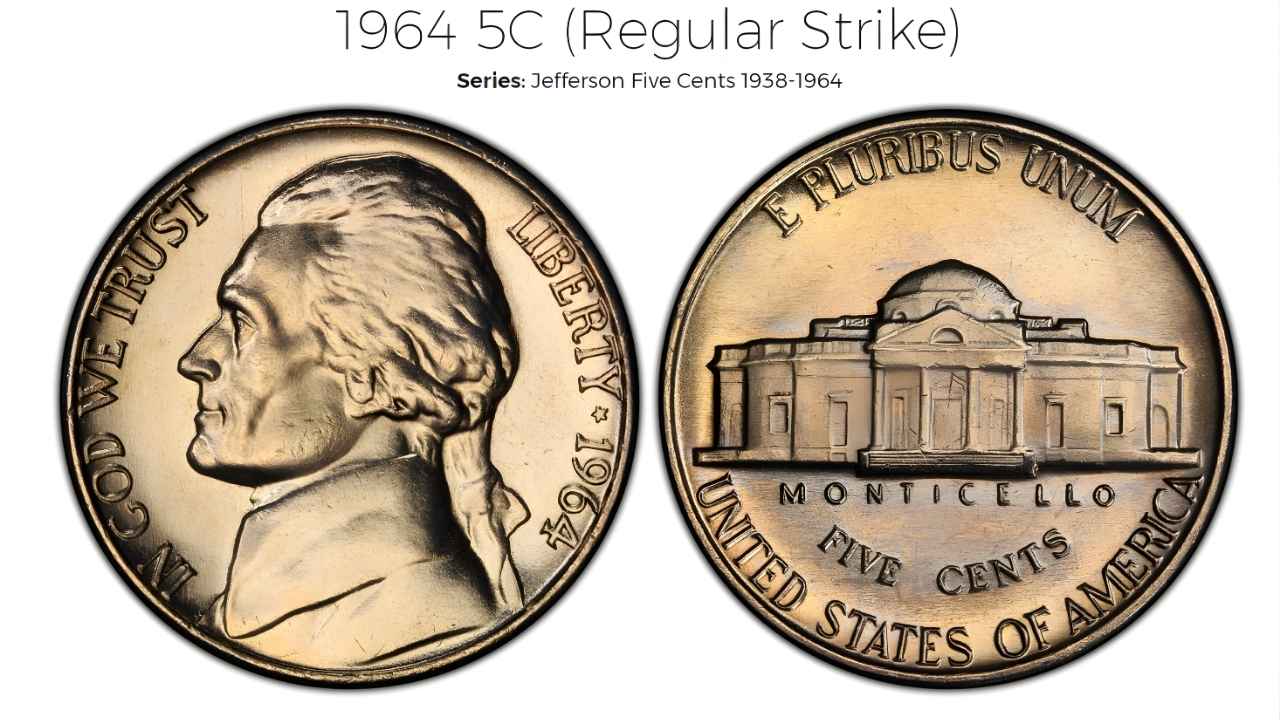
The 1964 nickel may look like ordinary pocket change, yet it represents a remarkable moment in American coin history. During the early 1960s, the United States Mint was under intense pressure to produce coins quickly to keep up with rising demand. Economic growth, population increases, and expanding commerce meant more currency was needed in circulation. Billions of nickels were struck that year, making it one of the most heavily produced coins of its type. Despite this enormous output, certain examples developed subtle differences that now attract strong interest from collectors.
Why 1964 Was a Landmark Year for Coin Production
The mid-1960s marked a transition period in U.S. coinage. Rising metal prices forced changes in how coins were made, and 1964 became the final year before major composition adjustments affected several denominations. Although nickels themselves did not contain silver, the urgency to mint large quantities influenced production quality. Dies wore down faster, striking pressure varied, and minor inconsistencies slipped into circulation. These variations created collectible distinctions that enthusiasts still search for today.
Design Details That Collectors Examine Closely
The coin’s design features a portrait of Thomas Jefferson on the front and his historic home Monticello on the reverse. While the design remained consistent with earlier issues, collectors pay close attention to how sharply these details appear. Jefferson’s hair texture, facial lines, and the architectural features of Monticello all reveal how well a coin was struck. Strong detail usually indicates a higher-quality example, which can significantly raise its desirability.

Rare Varieties That Increase Value
Not every 1964 nickel is valuable, but some possess characteristics that set them apart. One of the most sought-after traits is doubling in the lettering or design, caused by slight misalignment during the minting process. Another prized feature is the full steps designation, referring to the clarity of the steps on Monticello. Coins displaying uninterrupted, sharply defined steps are much scarcer than standard strikes. Because relatively few survived in top condition, these varieties can sell for far more than face value.
The Importance of Condition and Grading
Condition is often the deciding factor in a coin’s worth. A heavily worn nickel that has spent decades in circulation will typically be valued only for its denomination. In contrast, an uncirculated coin with original shine and crisp detail can command a premium. Professional grading services evaluate coins on a detailed scale, considering luster, strike quality, and surface preservation. Even a small scratch or blemish can lower a grade, which is why collectors handle potential high-value coins with extreme care.
Market Demand for 1964 Nickels
Despite their high mintage, interest in 1964 nickels remains strong because collectors enjoy searching for overlooked treasures. The possibility of discovering a rare variety in everyday change keeps demand alive. Auction records show that top-graded examples or coins with unusual features can sell for hundreds or even thousands of dollars. This demand is fueled by both hobbyists and investors who appreciate coins as tangible assets with historical value.

How to Check If Your Nickel Is Valuable
Examining a 1964 nickel carefully can reveal whether it might be worth more than five cents. Start by inspecting it under bright light and magnification. Look for doubling in the date or lettering, sharpness in Monticello’s steps, and overall detail quality. Comparing your coin with verified examples from trusted reference guides can help identify rare traits. If a coin appears unusual or exceptionally well preserved, professional authentication is the safest way to confirm its status.
Why Saving This Coin Can Be a Smart Move
Spending a 1964 nickel without checking it first could mean missing out on a hidden collectible. While most examples remain common, the chance of owning a scarce variety makes it worthwhile to set these coins aside for inspection. Over time, as more collectors enter the hobby and high-grade specimens become harder to find, the best examples may continue to increase in value. Keeping one could be a small but meaningful investment in both history and potential profit.
Final Verdict
The 1964 nickel stands as proof that even the most familiar coins can hold unexpected significance. With its historical context, possible rare varieties, and strong collector interest, it deserves more attention than its modest denomination suggests. Whether you are a beginner or a seasoned collector, taking a closer look at this coin could turn an ordinary piece of change into a noteworthy discovery.