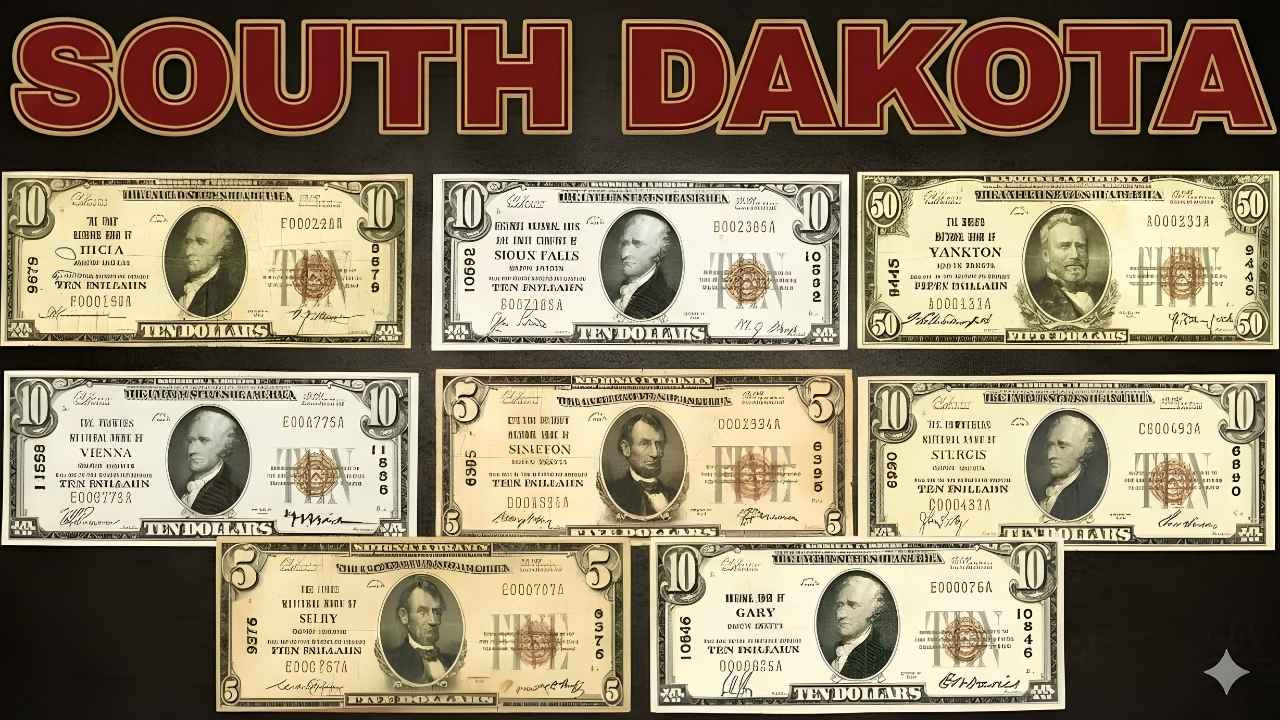
South Dakota’s early paper money tells a story far richer than its face value suggests. Long before modern standardized currency dominated wallets, local banks issued their own notes, each printed with the name of a specific town and institution. These bills reflected the pride, ambition, and economic strength of the communities that produced them. Today, collectors treasure them not only for rarity but also for the history they carry from the frontier era to the early twentieth century.
How Local Banknotes Became Part of Daily Life
During the late 1800s, banks across South Dakota issued their own paper money under federal authorization. These notes circulated widely in local markets, shops, and farms, serving as trusted payment backed by both government bonds and the reputation of the issuing bank. Because each note displayed the bank’s name and town, residents often felt a personal connection to the currency they used. Money wasn’t just money; it was a symbol of hometown reliability and economic progress.
Town Names Printed on Currency
One of the most distinctive features of these notes was the inclusion of local place names. Bills issued in Sioux Falls or Deadwood looked similar in layout but differed in identity because of the town printed across the face. Smaller communities such as Yankton, Pierre, and Aberdeen also issued notes, and these are often the most sought after today. For collectors, finding a bill from a lesser-known town can feel like uncovering a lost chapter of regional history.

Artwork and Symbolism on Early Notes
These banknotes were designed with remarkable detail. Engraved portraits, allegorical figures, and patriotic emblems filled the surface, reflecting the optimism of a growing nation. Many designs celebrated agriculture, transportation, or industry, illustrating the economic backbone of the era. Produced for circulation across the United States, they blended national imagery with local identity. The result was currency that functioned as both financial instrument and artistic artifact.
The Importance of Small Community Banks
Local banks played a vital role in shaping these notes’ value and credibility. In towns like Mitchell and Brookings, trust in the bank often determined whether residents accepted the paper money without hesitation. A respected bank meant its notes circulated freely, while a struggling institution could see its currency discounted or refused. This close link between reputation and money gave banknotes a deeply personal dimension rarely seen in modern finance.
Why Some Notes Are Extremely Rare
Not all South Dakota banknotes survived the passage of time. Fires, bank closures, economic downturns, and simple wear destroyed many examples. Because of this, certain issues exist in very limited numbers today. Notes from short-lived banks or small towns can command impressive prices when they appear at auctions. Collectors especially prize pieces that remain crisp and well preserved, since condition plays a major role in determining value.

The Shift Toward National Currency Control
The era of hometown banknotes gradually ended in the early twentieth century as the federal government centralized currency production. The establishment of the Federal Reserve System standardized money nationwide, reducing the need for locally issued notes. While this change improved financial stability, it also marked the disappearance of personalized currency tied to individual communities. What once filled wallets as everyday cash became historical relics almost overnight.
Why Collectors Seek Them Today
Modern collectors are drawn to South Dakota banknotes because each one tells a story. A single note can reveal details about a town’s economy, a bank’s history, and even the artistic trends of its era. Many hobbyists search specifically for notes from their hometown or region, creating a personal link to the past. This emotional connection, combined with scarcity, keeps demand strong in the collector market.
Final Thoughts
South Dakota’s early banknotes are far more than obsolete currency. They are tangible reminders of a time when local identity shaped everyday commerce and when a piece of paper money represented both financial trust and civic pride. For collectors and history enthusiasts alike, these notes preserve the spirit of the towns that issued them, offering a fascinating glimpse into the financial life of another era.