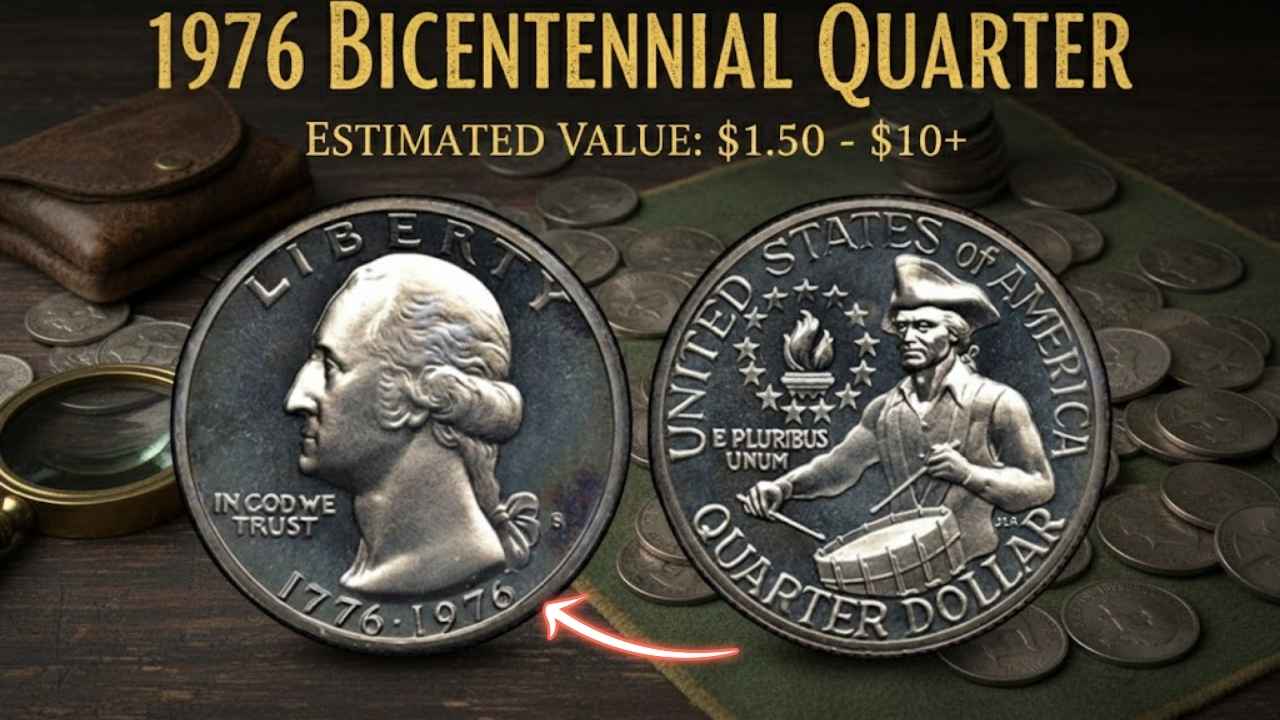
The 1976 Drummer Boy Quarter remains one of the most recognizable commemorative coins ever released in the United States. Issued to celebrate the nation’s 200th anniversary of independence, the coin replaced the standard eagle reverse with a colonial drummer design that symbolized patriotism and revolution. The design was selected through a national competition organized by the United States Mint, and artist Jack L. Ahr created the winning image. Because the coin was released into circulation rather than limited strictly to collectors, millions of Americans encountered it in everyday transactions, making it both historically meaningful and widely recognized decades later.
How Many Were Made and Why Most Are Common
Production numbers for these quarters were extremely high because they were intended for daily use rather than rarity. Facilities such as the Philadelphia Mint and the Denver Mint struck massive quantities using copper-nickel clad metal. As a result, worn examples are still easy to find today in jars, drawers, or inherited collections. Since supply greatly exceeds collector demand, most circulated pieces hold only face value. Even coins that look shiny or lightly used usually sell for just a small premium unless they are preserved in pristine condition or graded professionally.
Special Collector Versions That Carry Premium Value
While everyday examples are common, certain varieties produced for collectors can be more desirable. The San Francisco Mint issued proof and special uncirculated editions made with 40 percent silver. These were sold directly to collectors in presentation sets rather than distributed through banks. Silver versions are slightly heavier and can often be identified by their solid silver-colored edges instead of the copper stripe seen on standard coins. Proof coins display mirrorlike backgrounds and sharply defined details, whereas uncirculated silver pieces have a softer satin finish. Their worth depends largely on preservation quality, grading scores, and collector interest at the time of sale.
Separating Facts From the $550,000 Rumor
Stories about a single quarter being worth hundreds of thousands of dollars circulate widely online, but such claims rarely reflect real market sales. No widely verified auction record shows a standard example reaching anywhere near that level. Exceptional coins can command strong prices if they feature dramatic minting errors, flawless surfaces, or perfect grading, yet even those usually sell for hundreds or thousands rather than hundreds of thousands. Exaggerated price rumors often stem from misunderstandings, misreported listings, or unrealistic asking prices rather than confirmed transactions.
Simple Ways to Check If Yours Has Extra Value
Anyone curious about their coin can perform a quick inspection at home. Start by examining the edge; a solid silver color suggests a collector silver issue. Next, look for a mint mark near the date. An S mark indicates a special strike made for collectors, which can increase value. Inspect the design closely under bright light for unusual traits such as doubled lettering, off-center images, or missing elements, as mint errors sometimes attract strong interest. One important rule is never to clean the coin, because polishing or scrubbing can permanently damage its surface and reduce collector appeal.
Why These Coins Remain Popular Today
Part of the charm of this commemorative quarter is its connection to a historic national milestone combined with its accessibility. Unlike rare coins locked away in vaults, many people still encounter these pieces unexpectedly, creating excitement and curiosity. For collectors, the appeal lies not just in potential value but also in the story behind the design and the era it represents. Even common examples can serve as meaningful keepsakes that link modern generations with a celebratory moment in American history.
Disclaimer
This article is for informational purposes only and is based on publicly available information and collector reports. Coin values may vary depending on condition, grading, rarity, and market demand, and they can change over time or differ by region. Readers should always verify details with official sources or professional coin experts before making any buying, selling, or valuation decisions.