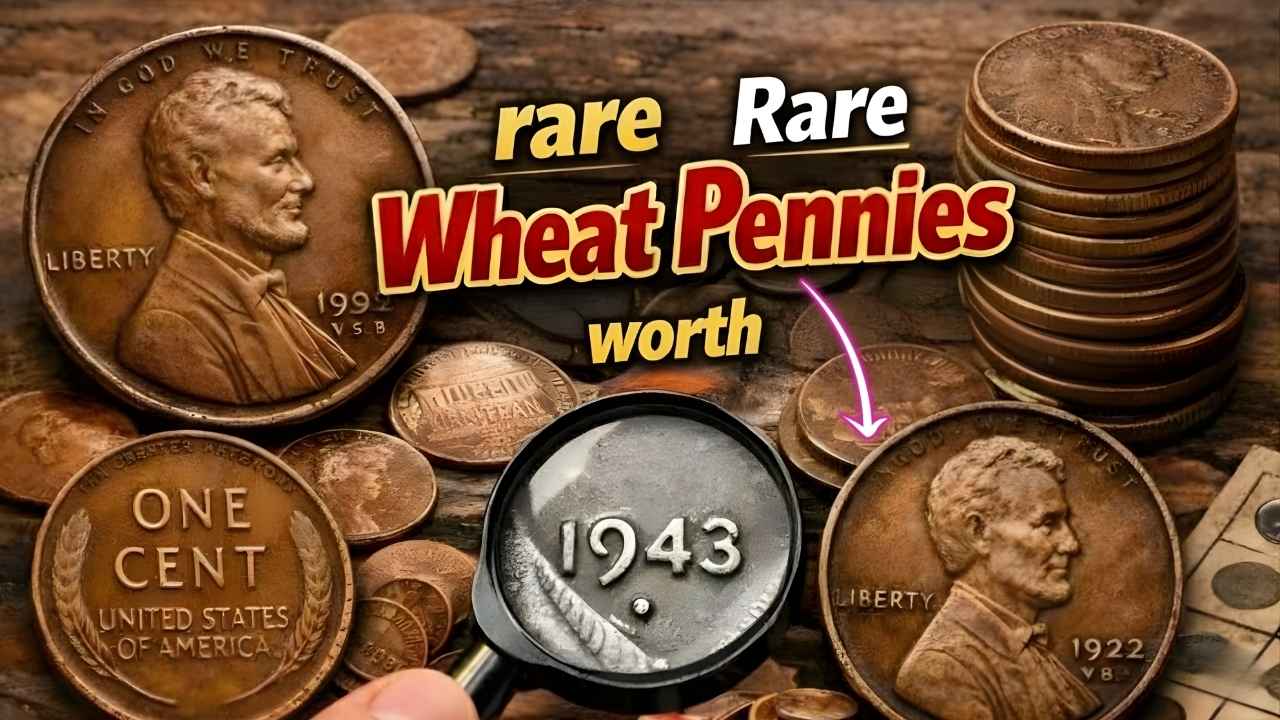
Wheat pennies, minted from 1909 through 1958, remain some of the most admired coins in American collecting. Featuring Abraham Lincoln on the front and two wheat stalks on the reverse, they combine history with distinctive design. The coin was created by Victor David Brenner and produced by the United States Mint during a period when American coinage was evolving both artistically and technically. Although millions were struck, a small number of rare dates and unusual varieties have made the series famous among collectors.
Why Certain Wheat Pennies Are Worth So Much
The value of any collectible coin depends mainly on rarity, condition, and demand. Wheat pennies that had low mintages or were produced with unusual minting mistakes often bring the highest prices. Some coins became scarce because they were heavily used in circulation, while others were rare from the start. Collectors also pay close attention to condition, since coins with sharp detail and minimal wear are far harder to find than worn examples. Historical significance adds another layer of appeal, especially when a coin connects to a unique event or production change.
Nine Wheat Pennies That Stand Out
Several coins in this series are consistently ranked among the most valuable. The 1909-S VDB is famous for its low production at the San Francisco Mint and for featuring the designer’s initials before they were removed. The 1914-D, produced at the Denver Mint, is another key rarity prized in higher grades. The 1922 No D variety is well known because the mintmark is missing due to a striking issue, making it instantly recognizable.

The 1931-S is scarce because fewer than a million were produced, and collectors compete strongly for well-preserved examples. The legendary 1943 copper cent is among the rarest of all, created when a few copper blanks were accidentally struck during a year when pennies were supposed to be steel. Another famous transitional error is the 1944 steel cent, made when leftover steel planchets from the previous year were mistakenly used. The 1955 doubled die is perhaps the most visually striking, showing obvious doubling in the date and lettering. The 1926-S is valued for its scarcity in high grades, while the 1909-S without initials remains a cornerstone coin for collectors building a complete set.
How Grading Determines Value
Condition has a dramatic effect on a coin’s price. Professional grading systems rank coins from heavily worn to flawless mint state. A rare coin in average condition may still be valuable, but the same coin in pristine form can multiply in worth many times over. This is why collectors handle coins carefully and store them in protective holders. Authentication and grading from reputable services often increase a coin’s desirability because buyers trust the accuracy of certified evaluations.
Still Hiding in Plain Sight
One reason Wheat pennies remain so popular is the possibility of discovery. Unlike rare artifacts locked away in museums, these coins were once everyday money, which means they can still turn up in unexpected places. People sometimes find them in old jars, inherited collections, or even mixed with modern coins. While most finds are common dates, the chance of uncovering a scarce variety keeps collectors searching.
Current Collector Interest
Interest in Wheat pennies remains strong in 2026, supported by steady demand and a growing community of enthusiasts. Online marketplaces and auctions have made it easier than ever for collectors to research prices, compare examples, and track trends. High-quality rare coins continue to command premium prices, while common dates remain affordable entry points for beginners. This balance helps sustain interest across all experience levels.
Smart Collecting Tips
Learning to identify key dates and mintmarks is one of the best ways to start collecting. Examining coins under good lighting can reveal small details that determine rarity. Avoid cleaning coins, since even gentle polishing can reduce value. When a coin appears unusual or especially well preserved, professional evaluation is often worthwhile. Staying informed about recent sales also helps collectors understand how values shift over time.
Final Thoughts
Wheat pennies hold a unique place in coin collecting because they combine accessibility with the thrill of discovery. While most are modestly priced, a select group of rare dates and error varieties can be worth thousands. Their lasting popularity proves that even the smallest denomination can carry immense historical and collectible value, making them a fascinating pursuit for both beginners and seasoned collectors alike.