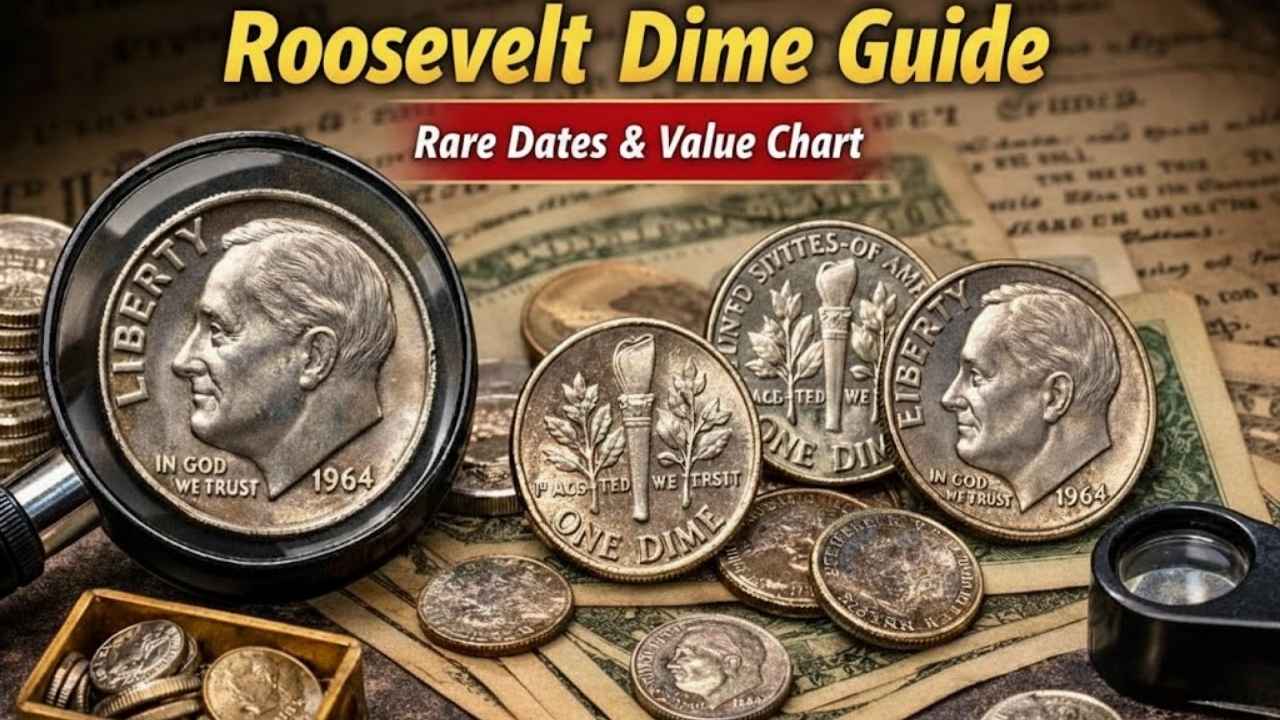
The Roosevelt dime entered circulation in 1946 as a tribute to Franklin D. Roosevelt, whose leadership during difficult times made him one of the most influential figures in American history. Designed by John R. Sinnock and produced by the United States Mint, the coin replaced the Mercury dime and introduced a clean, modern portrait paired with a symbolic reverse featuring a torch, olive branch, and oak branch. Early versions were struck in silver until 1964, after which rising metal costs led to a copper-nickel composition. Despite this change, the coin’s design has remained largely consistent for decades.
Why Some Roosevelt Dimes Are Worth More Than Face Value
Most Roosevelt dimes remain common and circulate at their original value, yet a select number stand out because of rarity or unusual features. Coins produced in small quantities, those with striking mistakes, or pieces preserved in exceptional condition often attract strong collector interest. In many cases, the difference between a coin worth ten cents and one worth hundreds comes down to details that are barely visible without magnification. For collectors, the excitement lies in identifying those tiny clues that signal something special.
Rare Varieties Collectors Actively Seek
Several Roosevelt dime varieties have gained recognition for their scarcity. The 1949-S issue from the San Francisco Mint is notable for its relatively low production, making it harder to find in pristine condition. Another standout is the 1964 doubled die obverse, which shows visible duplication in the lettering and date. The 1982 no-mintmark dime, struck at the Philadelphia Mint, is a well-known error caused by a missing mintmark. Collectors also prize the 1996-W special issue from the West Point Mint because of its limited mintage. Each of these coins demonstrates how small production differences can create lasting collector demand.
Error Coins That Bring Premium Prices
Minting errors are among the most exciting finds in modern coin collecting. Off-center strikes, where part of the design is missing, can bring strong prices depending on how dramatic the error appears. Coins struck on the wrong planchet are even rarer, since they were accidentally minted on blanks meant for other denominations. These unusual pieces often become centerpiece items in collections because they show how production mistakes can produce one-of-a-kind results.
The Importance of Condition and Grading
Condition is often the deciding factor in a coin’s final value. Collectors rely on grading systems that evaluate surface quality, luster, and detail. A rare variety in worn condition might still be desirable, but the same coin in near-perfect shape could be worth many times more. Professional grading services authenticate coins and assign standardized grades, giving buyers confidence when purchasing higher-value specimens. This process helps establish fair market prices and reduces uncertainty in transactions.
Estimated Value Ranges in 2026
Market estimates in 2026 show how dramatically prices can vary. Scarce but relatively affordable pieces such as certain low-mintage dimes may sell for around fifty to a few hundred dollars in high grade. Rare doubled dies or missing mintmark examples can reach into the thousands. Exceptional error coins, especially those with dramatic visual differences, sometimes bring even higher sums. These ranges demonstrate how rarity and preservation combine to shape a coin’s worth.

Why Interest Remains Strong Today
Roosevelt dimes continue to attract collectors because they are both historically meaningful and widely available. Unlike ancient coins that are difficult to obtain, these dimes can still appear in circulation or old collections. That accessibility keeps the hobby exciting, since anyone might stumble upon a valuable piece unexpectedly. Online trading platforms and auctions have also expanded access, allowing collectors worldwide to study prices and compare examples before making purchases.
Tips for Finding Valuable Examples
Careful inspection is the first step in identifying a potentially valuable dime. Checking dates, mintmarks, and design details can reveal important clues. Using magnification helps spot doubling or other unusual features. Proper storage is equally important, since scratches or discoloration can reduce value. When a coin appears rare or unusual, professional authentication is often worthwhile to confirm its status and determine an accurate market estimate.
Final Verdict
The Roosevelt dime proves that even a small denomination coin can hold remarkable value when rarity, condition, and collector demand align. While most examples remain ordinary, a select few stand out as prized collectibles worth far more than their face value. For enthusiasts, the thrill comes from the possibility that a tiny piece of change could turn out to be a hidden treasure waiting to be discovered.