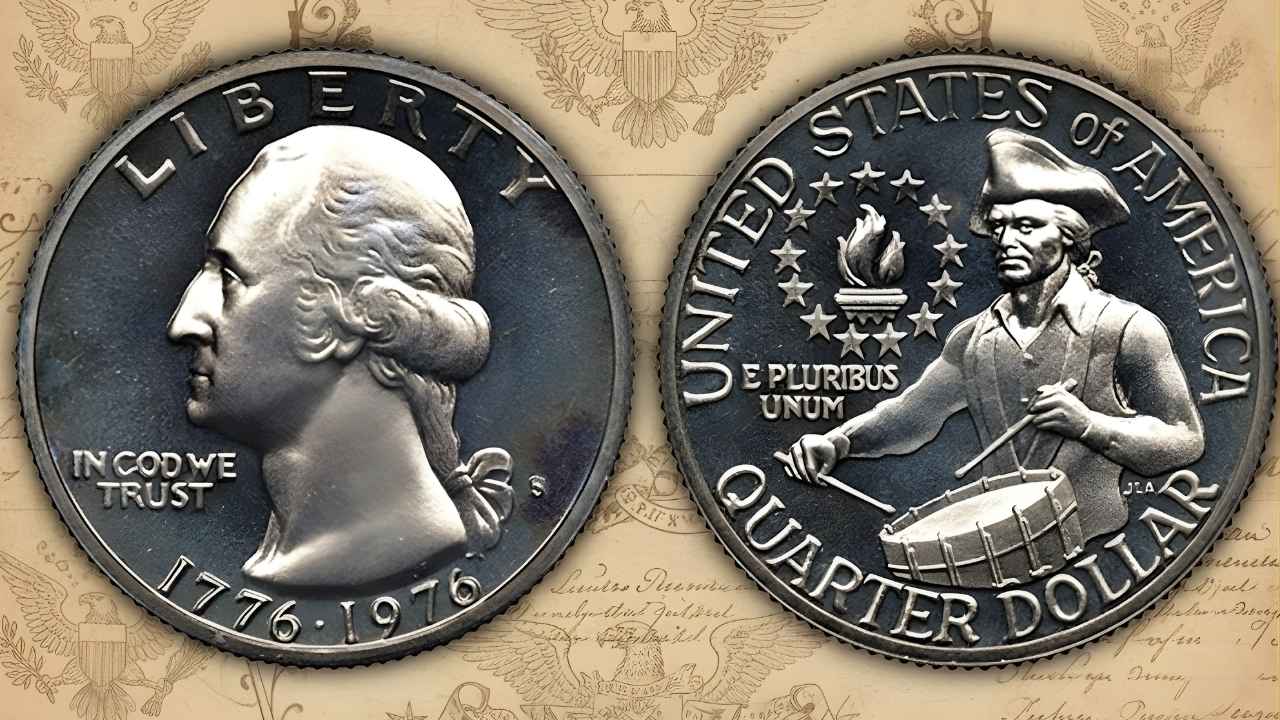
The 1976 Bicentennial Quarter stands as one of the most recognizable modern coins ever issued. Created to celebrate 200 years of independence in the United States, it blends history, symbolism, and collectible appeal in a single design. While most people have handled one at some point, few realize that certain examples have sold for astonishing sums. Though millions were produced, rarity can emerge through condition, composition, or unusual minting quirks, turning an ordinary coin into a prized collectible.
A Design That Captured a Historic Moment
Unlike standard quarters, this commemorative issue features a distinctive reverse design by artist Jack L. Ahr. Instead of the traditional eagle, the coin displays a colonial drummer accompanied by a torch and thirteen stars representing the original colonies. The obverse still carries George Washington’s portrait but includes the dual date 1776–1976, marking the bicentennial celebration. This combination of familiar and unique elements gives the coin instant visual appeal and historical meaning.
Where These Coins Were Made
Production of Bicentennial Quarters took place at three major facilities: the Philadelphia Mint, the Denver Mint, and the San Francisco Mint. Coins without a mint mark came from Philadelphia, while those with a D or S indicate Denver and San Francisco respectively. Each location struck different versions, including circulation pieces, collector editions, and proof strikes. These mint differences play an important role in determining scarcity and value today.

Why Some Are Worth More Than Face Value
Most Bicentennial Quarters found in circulation are made of copper-nickel clad and typically remain worth only their denomination. However, special collector versions were struck in 40 percent silver, making them inherently more valuable due to metal content and limited production. Condition also matters greatly. A heavily worn coin might be common, but a sharply struck example with original luster can attract collectors willing to pay significantly more.
The Role of Rare Errors
Some of the most valuable Drummer Boy Quarters owe their worth to minting mistakes. Doubled dies, off-center strikes, and wrong planchet errors are especially sought after. These unusual variations occur during the manufacturing process and often create visible differences that set a coin apart from standard issues. Because such mistakes are rare and visually striking, collectors prize them as tangible evidence of the minting process in action.
The Quarter That Reached a Stunning Price
Stories occasionally surface about exceptional Bicentennial Quarters selling for eye-catching amounts. One famous example reportedly surpassed half a million dollars at auction, largely due to a combination of pristine preservation, rarity, and a distinctive error. Results like this are unusual, yet they demonstrate how the right mix of factors can elevate even a modern coin to legendary status in the collecting world.

Grading and Authentication Matter
Professional grading services evaluate coins on a scale from poor condition to perfect mint state. Higher grades usually translate to higher value, especially when dealing with modern commemoratives where flawless examples are scarce. Certification also assures buyers that a coin is genuine and accurately described, which helps establish trust in private sales and auctions.
The Joy of Searching for Hidden Gems
Part of the appeal of collecting Bicentennial Quarters lies in the thrill of discovery. Unlike many rare coins locked away in museums or vaults, these can still be found in circulation, coin rolls, or old family collections. The possibility that an overlooked coin might hold unexpected value keeps enthusiasts engaged and encourages careful examination of everyday change.
Final Verdict
The 1976 Drummer Boy Quarter proves that even modern coins can become remarkable collectibles under the right circumstances. While most remain common keepsakes from a historic celebration, a select few stand out because of silver content, exceptional condition, or rare minting errors. For collectors, the lesson is simple: never underestimate the potential value hidden in ordinary coins, because sometimes history and rarity appear in the smallest forms.