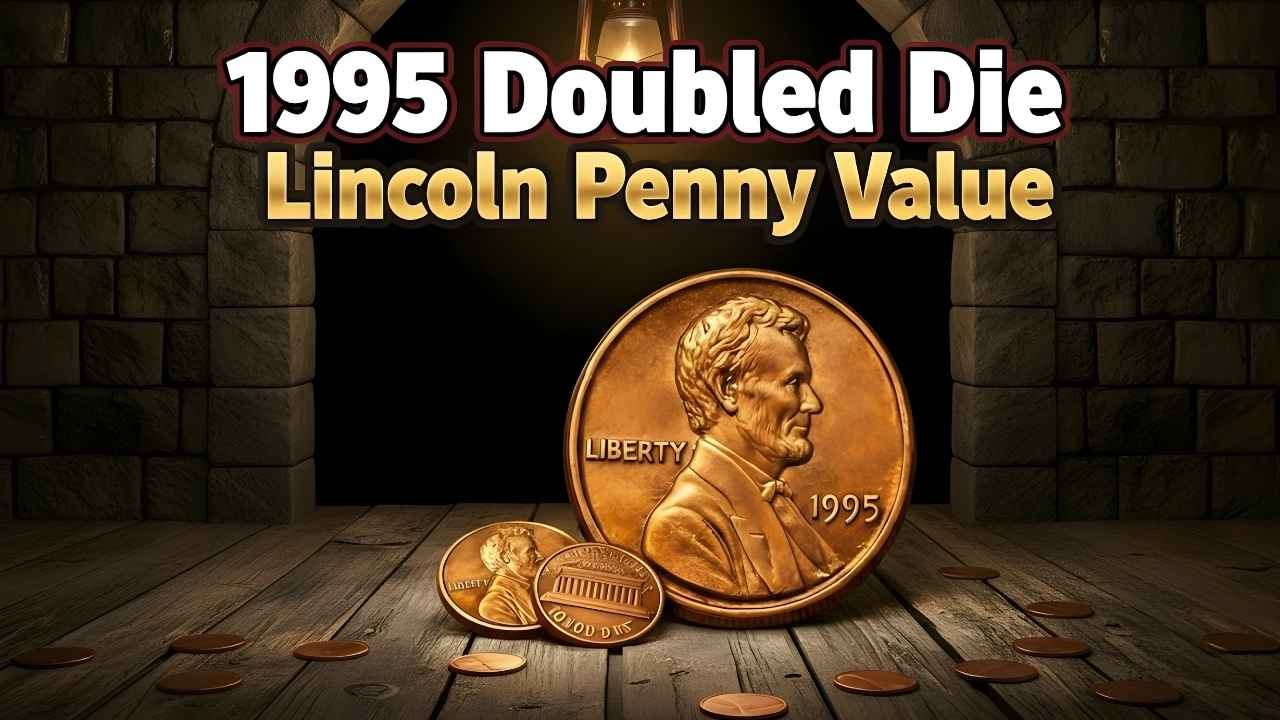
The Lincoln cent has long been a staple of American pocket change, but a small number of these coins have earned a place in collector showcases instead of cash registers. Among modern issues, the 1995 Doubled Die stands out as one of the most recognized and widely searched error varieties. In 2026, it continues to attract attention from hobbyists eager to find a coin that could be worth far more than its one-cent face value.
The Legacy of the Lincoln Cent
First issued in 1909 to honor Abraham Lincoln, the Lincoln cent marked a turning point in American coinage as the first circulating U.S. coin to feature a real historical figure. Designed by Victor David Brenner, the coin originally displayed two wheat ears on the reverse. Over time, the design evolved to include the Lincoln Memorial and later the Union Shield. Despite these changes, the obverse portrait has remained largely consistent, which makes noticeable design errors easier to identify.
What Makes the 1995 Doubled Die Special
The 1995 Doubled Die Lincoln cent is prized because of clear and dramatic doubling on the obverse lettering. The effect is most visible in the word LIBERTY and in the motto IN GOD WE TRUST. Unlike minor machine doubling that can appear flat or shelf-like, this variety shows strong, separated images that are easy to spot with the naked eye. That visibility has made it one of the most popular modern doubled dies among collectors.
Although a significant number entered circulation, far fewer survive in pristine condition. As a result, well-preserved uncirculated examples bring much stronger prices than worn pieces pulled from change.
How a Doubled Die Error Happens
Doubled die errors occur during the die creation process at the United States Mint. Before coins are struck, a working die is made by pressing a hub bearing the coin’s design into a blank die. If the hub shifts slightly between impressions, the resulting die can carry a doubled image. Every coin struck from that die will display the same doubling.
In 1995, one such misalignment produced a bold variety that quickly caught the attention of collectors. Because the doubling is prominent and consistent, it is widely recognized and cataloged, making authentication straightforward when compared to more subtle varieties.
1995 Doubled Die Penny Values in 2026
Values depend heavily on condition. Circulated examples showing moderate wear typically sell in the $20 to $50 range. Coins in lower uncirculated grades may bring between $75 and $150. Attractive pieces graded around MS-65 often trade for several hundred dollars, while superb gems graded MS-67 can reach into the low thousands. Proof versions with the same doubled die characteristics are scarcer and may command even higher premiums when certified in top condition.
The gap between grades can be significant. A coin with minimal contact marks and strong luster is far more desirable than one with noticeable abrasions. Professional grading plays an important role in establishing both authenticity and market value.
How to Identify a Genuine Example
To check a 1995 penny, start by examining the obverse under good lighting. Focus on LIBERTY and IN GOD WE TRUST. The letters should show clear doubling with separation that appears rounded rather than flat. The date may also display slight doubling, though it is typically less dramatic than the lettering.
Collectors should be cautious of machine doubling, which often looks thinner and lacks depth. Using a magnifying glass can help, but the true doubled die is strong enough to see without advanced tools. If you suspect you have a genuine example in high grade, submitting it to a reputable grading service is a wise step.
Why Collectors Still Love This Coin
The 1995 Doubled Die strikes a balance that appeals to a wide audience. It is modern enough to be found in circulation, yet dramatic enough to feel special. It offers affordability for beginners and meaningful upside for advanced collectors seeking top-grade pieces. In 2026, online marketplaces and coin forums continue to feature steady buying and selling activity, reflecting lasting interest.
Unlike ultra-rare early 20th-century doubled dies, this variety remains accessible, which keeps demand consistent. Many collectors recall searching rolls of pennies in hopes of spotting that telltale doubling, adding an element of nostalgia to its appeal.
Final Thoughts
The 1995 Doubled Die Lincoln cent proves that valuable coins are not always ancient or made of silver and gold. A simple one-cent piece can carry a striking error that transforms it into a sought-after collectible. While most examples trade for modest premiums, high-grade and proof versions can reach impressive price levels in 2026. For collectors willing to look closely at their change, this modern classic continues to offer both excitement and opportunity.