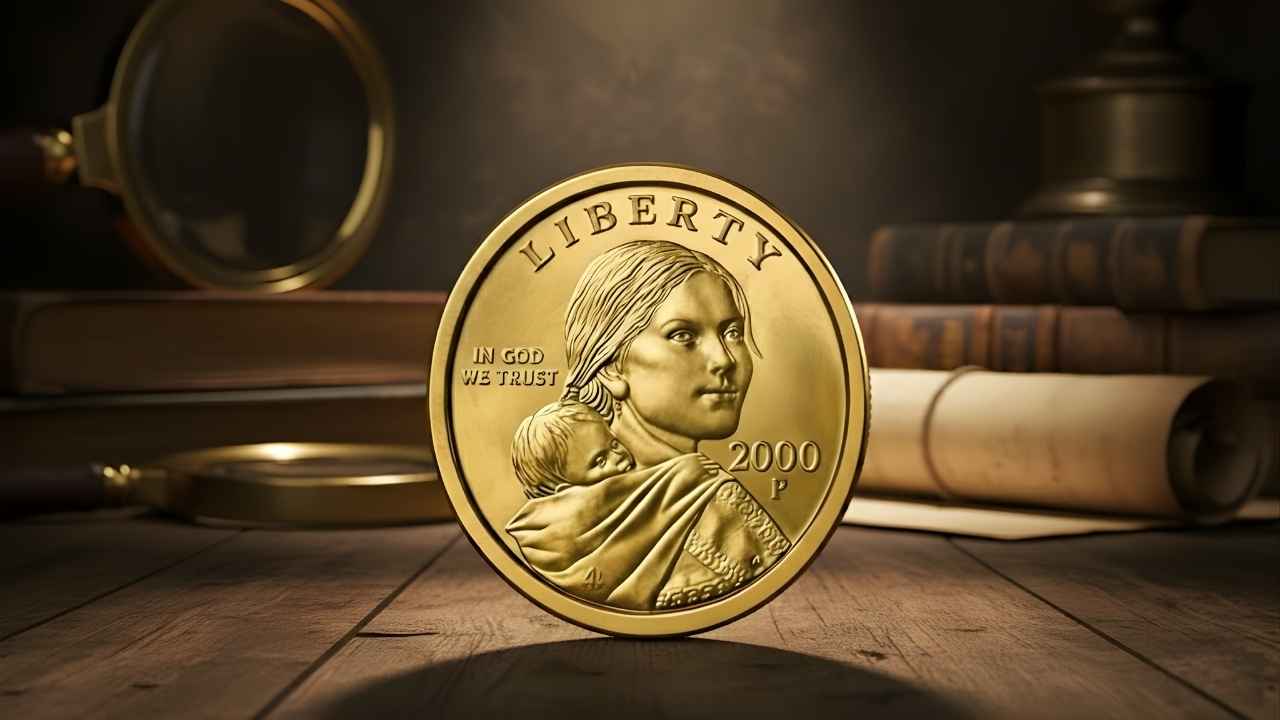
The Sacagawea dollar has been part of American currency since 2000, yet many people still overlook its potential value. Created to honor Sacagawea, the Shoshone woman who helped guide the Lewis and Clark expedition, the coin features a powerful portrait of her carrying her son on the obverse and a soaring eagle on the original reverse. While most examples remain worth one dollar, certain years, mint marks, grades, and mint errors can make a Sacagawea Dollar far more valuable in 2026.
A Quick Look at the Coin’s Background
The Sacagawea Dollar was introduced by the United States Mint to replace the Susan B. Anthony Dollar. Its golden color, created from a manganese-brass alloy, was meant to distinguish it clearly from quarters and other silver-toned coins. Although it never became widely used in everyday transactions, collectors appreciated its detailed design and historical importance.
Over time, the series expanded to include Native American reverse designs beginning in 2009, adding even more variety for collectors to explore.
What Determines Sacagawea Dollar Value in 2026
Not every Sacagawea Dollar carries a premium, but several factors can raise its value. The year of issue is important, especially early dates such as 2000 and 2001. Coins from these years were saved in large numbers, yet high-grade pieces are still sought after.
Mint marks also matter. Coins struck in Philadelphia carry a P, Denver issues show a D, San Francisco coins display an S, and some special collector pieces include a W for West Point. Proof coins from San Francisco often have mirror-like surfaces and are typically more valuable than standard circulation strikes.

Condition plays an even bigger role. A coin that appears shiny, sharp, and free from heavy marks will usually bring more than a worn example. Collectors rely on grading systems to determine condition, which directly impacts price.
Understanding Mint Marks and Their Importance
Mint marks reveal where a coin was produced. For Sacagawea Dollars, the most common marks are P and D. These are generally circulation coins. An S mint mark usually indicates a proof coin made specifically for collectors. Proof coins are struck with special dies and polished blanks, resulting in crisp details and reflective fields.
The W mint mark is less common and appears on certain collector issues. Because fewer of these coins were produced, they often attract stronger demand. Identifying the mint mark is one of the first steps in determining whether a coin might carry extra value.
Valuable Errors to Look For
Mint errors are among the most exciting discoveries in coin collecting. On Sacagawea Dollars, collectors search for off-center strikes, double strikes, clipped planchets, and missing edge lettering. Some errors are subtle, while others are dramatic and easy to see.
A well-known example within the broader Sacagawea series is the mule error, where mismatched dies were used. Although rare, such mistakes can command large premiums at auction. Even smaller, verified errors can increase a coin’s worth significantly compared to standard issues.

If you suspect an error, avoid cleaning the coin and consider professional authentication to confirm its legitimacy.
Why Grading Matters So Much
Coin grading uses a 1 to 70 scale to measure condition. Circulated coins with visible wear receive lower numbers, while pristine, uncirculated coins fall into the Mint State category, often labeled MS followed by a number. Coins graded MS65 or higher are considered high quality, with strong luster and minimal contact marks.
An MS67 Sacagawea Dollar can be worth many times more than the same coin in circulated condition. Because grading can dramatically affect price, many collectors submit promising coins to professional grading services for evaluation and encapsulation.
Sacagawea Dollar Value Overview for 2026
Common circulated examples from most years generally trade between one and three dollars. Uncirculated coins from earlier years may range from five to fifteen dollars depending on grade. Proof coins often sell between fifteen and fifty dollars, while high-grade or special issues can reach higher levels. Verified mint errors may bring hundreds or more, depending on rarity and eye appeal.
Market demand remains steady in 2026, especially for top-grade coins and unique varieties. Online auctions and collector forums continue to make buying and selling easier than ever.
Collector Tips for Protecting and Growing Value
Store your coins in protective holders to prevent scratches. Avoid touching the surfaces with bare hands, as oils can cause long-term damage. Keep coins away from moisture and extreme temperatures. Always check mint marks and inspect for unusual features before spending or selling a coin. If a coin appears exceptional, professional grading can help unlock its full value.
Final Thoughts
The Sacagawea Dollar is more than just a golden-colored coin tucked away in a drawer. While many examples are worth face value, specific years, mint marks, high grades, and mint errors can turn an ordinary dollar into a collectible piece. In 2026, careful examination and proper preservation remain the keys to discovering hidden value within this modern American coin series.