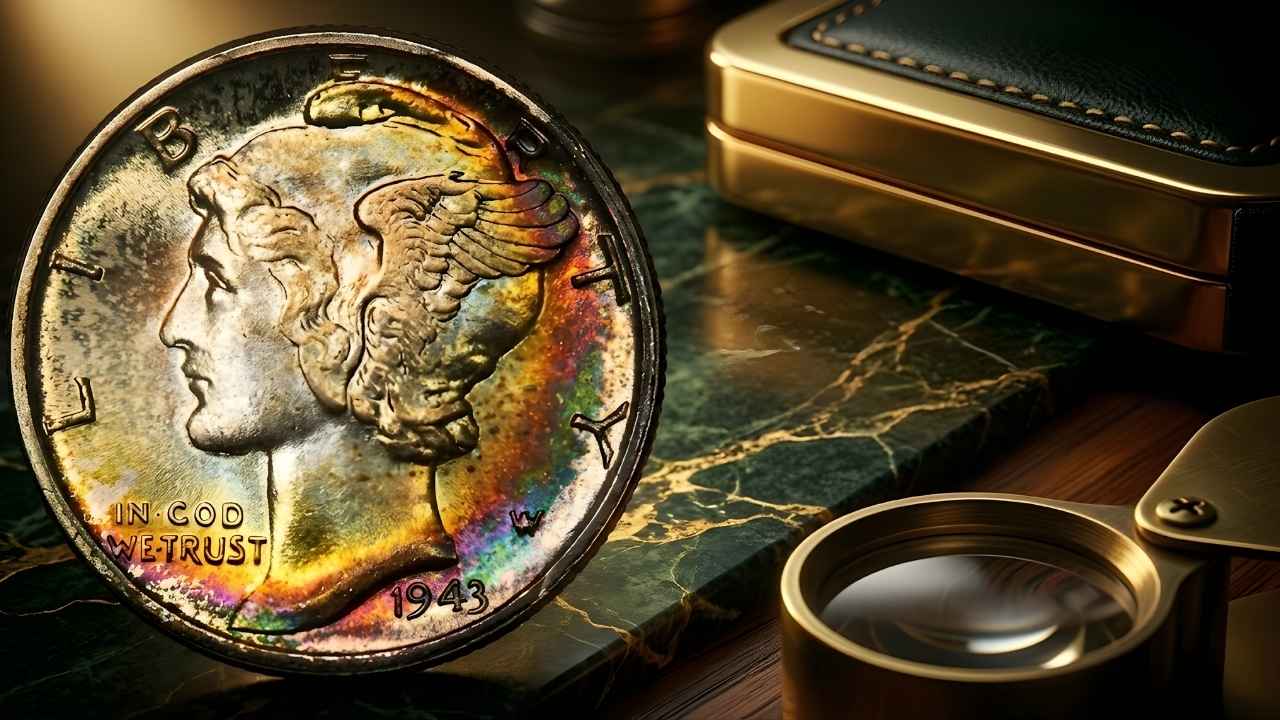
The 1943 Mercury dime stands as one of the most recognizable silver coins from the World War II era. Though millions were struck, this small ten-cent piece continues to attract attention from collectors and silver investors alike. With its classic Winged Liberty Head design and 90 percent silver composition, the 1943 dime offers both historical depth and measurable value. While many examples trade modestly above melt value, certain coins in exceptional condition can command impressive premiums in today’s market.
The Story Behind the 1943 Mercury Dime
The Mercury dime, officially known as the Winged Liberty Head dime, was designed by Adolph A. Weinman and minted from 1916 through 1945. The obverse features Liberty wearing a winged cap symbolizing freedom of thought, while the reverse displays a fasces and olive branch, representing strength and peace. By 1943, the United States was fully engaged in World War II, and these dimes circulated widely across the country. They passed through the hands of factory workers, soldiers, and families supporting the war effort, embedding them deeply in American history.
Although production numbers were high during 1943, relatively few coins survived in pristine condition. Heavy circulation and everyday use wore down details, making sharply preserved examples far more desirable decades later.
Mint Marks and Production Figures
The 1943 dime was produced at three U.S. Mint facilities: Philadelphia, Denver, and San Francisco. Philadelphia coins carry no mint mark, while Denver pieces show a “D” and San Francisco coins an “S” on the reverse near the base of the fasces. Philadelphia struck the largest quantity, making it the most common variety in circulated grades. Denver and San Francisco produced fewer coins, and high-grade examples from these mints can be tougher to find.
Even though the mintage totals reached into the tens of millions, collector demand focuses heavily on condition scarcity rather than just production numbers. This is why Mint State examples often bring strong prices compared to worn coins.
Silver Content and Melt Value
Each 1943 Mercury dime contains 0.0723 troy ounces of silver. Because it is composed of 90 percent silver and 10 percent copper, it holds intrinsic value tied directly to the silver market. When silver prices rise, the base value of the coin increases as well. Even a heavily circulated piece is worth significantly more than its ten-cent face value simply because of its metal content. However, the true appeal of the 1943 dime goes beyond melt value, especially when collector premiums enter the equation.
How Condition Impacts Value
Grading plays a crucial role in determining how much a 1943 dime is worth. Coins are evaluated based on wear, surface preservation, strike quality, and overall eye appeal. In lower circulated grades, values typically range from a few dollars above melt. As condition improves to Extremely Fine or About Uncirculated, prices rise noticeably.
Mint State examples, particularly those graded MS-65 or higher, can sell for well over one hundred dollars depending on eye appeal and strike sharpness. One important feature collectors look for is the Full Bands designation. This refers to the horizontal bands across the fasces on the reverse. When these bands are fully separated and sharply defined, the coin receives a premium that can significantly increase its market value.
Rare Varieties and Error Coins
While most 1943 dimes follow standard specifications, certain varieties and mint errors can bring substantial premiums. Doubled die obverse coins show visible doubling in the lettering or date. Off-center strikes and other minting mishaps also attract specialized collectors. Additionally, naturally toned coins displaying vibrant colors are sometimes highly sought after for their visual appeal.
These unusual examples are far scarcer than typical circulated coins, which is why they often command prices well beyond standard market ranges.
Comparing 1943 to Other Mercury Dimes
Within the broader Mercury dime series, the 1943 issue is not considered a key date. Coins such as the 1916-D or 1921 are much rarer and more expensive in any condition. However, the 1943 dime holds a unique position as a wartime coin that remains affordable for beginners while still offering upside potential in higher grades. Its balance of accessibility and historical relevance keeps demand strong year after year.
Storage and Long-Term Care
Preserving a 1943 dime properly helps maintain its value. Coins should be stored in acid-free holders or professional slabs to prevent environmental damage. Cleaning is strongly discouraged, as it can permanently reduce collector interest and resale value. Keeping the coin in a cool, dry environment protects both its silver content and surface integrity.

Final Verdict
The 1943 Mercury dime is far more than spare change from the past. With its silver composition, iconic design, and connection to World War II history, it continues to hold both sentimental and financial appeal. While common circulated examples remain affordable, high-grade coins and special varieties can bring impressive premiums. Whether you collect for history, silver investment, or the joy of completing a set, the 1943 dime proves that even small coins can carry lasting value.