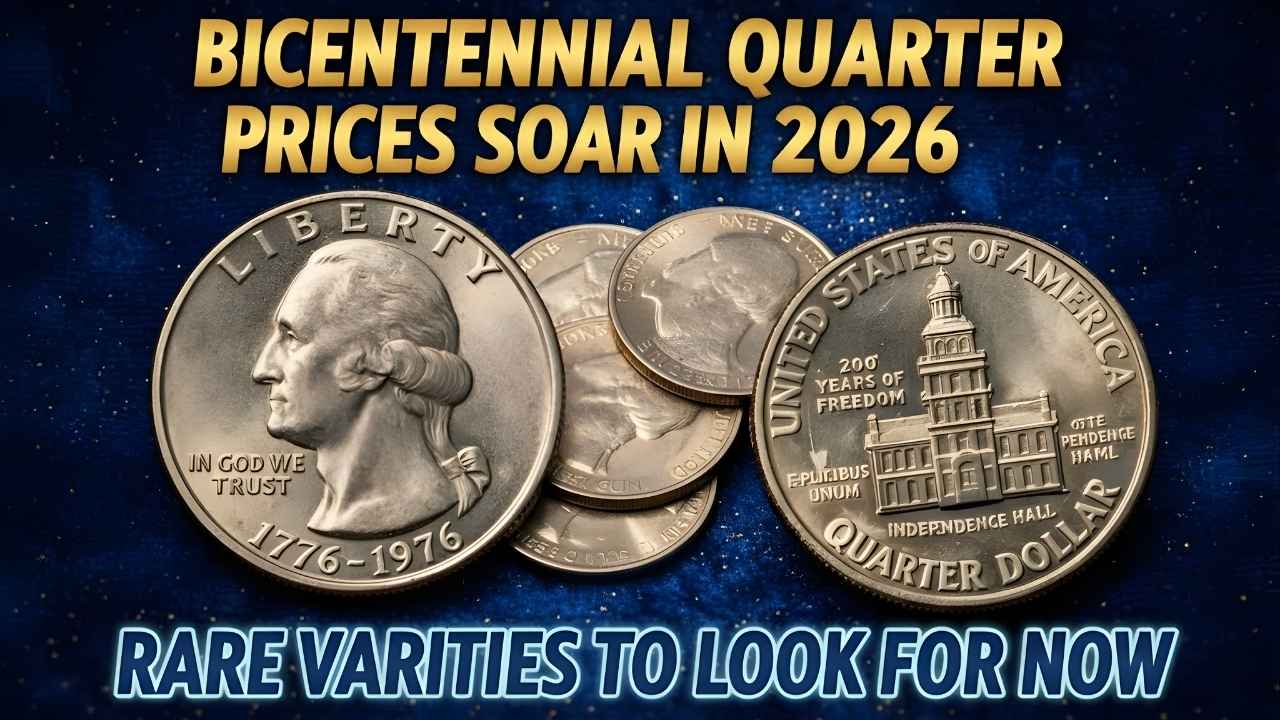
The United States Bicentennial quarter is more than just spare change rattling around in a drawer. Released to celebrate America’s 200th anniversary, this special quarter stands out with its dual date “1776–1976” and a striking colonial drummer design. While millions were produced, certain versions have become prized collectibles. In 2026, interest remains strong, and some rare examples are selling for far more than their face value.
The History Behind the 1776–1976 Quarter
To mark the nation’s bicentennial, the United States Mint introduced special reverse designs for the quarter, half dollar, and dollar. The quarter’s artwork, created by Jack L. Ahr, features a colonial drummer boy with a torch encircled by thirteen stars, symbolizing the original colonies. Unlike regular quarters, these coins display the dual date 1776–1976 instead of a single year. Production began in 1975 and continued through 1976, with no quarters dated 1975 released for circulation.
What Makes Some Bicentennial Quarters Valuable
Most Bicentennial Quarters found in circulation are worth exactly 25 cents. However, several factors can significantly increase their value. The composition of the coin is a major consideration. Standard circulation pieces were struck in copper-nickel clad, but special collector editions were minted in 40% silver. These silver versions are more desirable, especially when preserved in excellent condition.
Rarity also plays a central role. Coins with limited mintages, pristine surfaces, or unusual production mistakes naturally attract higher bids. As with any collectible, condition is critical. Coins graded at the top of the scale, particularly those labeled MS-67 or higher, can command impressive premiums because so few survive without noticeable marks.
Silver Editions and Proof Strikes
The 40% silver Bicentennial Quarters were produced primarily for collector sets and were not widely released into everyday circulation. They can be identified by their weight and edge appearance, lacking the visible copper stripe seen on clad coins. When found in uncirculated condition, these silver pieces often sell for many times their original issue price.
Proof versions are another category worth attention. Proof coins are specially struck using polished dies, resulting in mirror-like backgrounds and sharp details. Both copper-nickel and silver proof quarters exist, with silver proofs generally bringing stronger prices. High-grade proof coins with deep cameo contrast are especially attractive to collectors.
Mint Errors That Bring Big Money
Error coins create some of the most exciting discoveries in coin collecting. Bicentennial Quarters with off-center strikes, doubled images, clipped planchets, or wrong-metal errors have been known to sell for hundreds or even thousands of dollars. These mistakes occur during the minting process and are typically rare. Because counterfeits and alterations do exist, having a suspected error authenticated by a professional grading service is a wise move before selling.
The Importance of Condition and Grading
Even common copper-nickel Bicentennial Quarters can become valuable in exceptional condition. Coins that have never entered circulation and show no wear are classified as uncirculated. When certified by reputable grading services, high-grade examples can bring substantial premiums. The difference between a coin graded MS-65 and one graded MS-67 may mean hundreds or even thousands of dollars in value. Proper storage in protective holders helps preserve a coin’s surface and long-term worth.

Market Trends in 2026
As the United States approaches its 250th anniversary, interest in historic coinage has intensified. Online marketplaces and major auction houses continue to report steady demand for premium Bicentennial Quarters. Younger collectors, introduced to the hobby through social media and online communities, are increasingly drawn to coins with historical themes. The combination of patriotic design, affordability, and the thrill of finding a rare variety keeps this series in the spotlight.
How to Check Your Own Quarters
Start by examining the date and reverse design to confirm you have a Bicentennial issue. Look for a mint mark near Washington’s ponytail on the obverse. Inspect the coin’s edge to determine whether it is clad or silver. Pay attention to unusual features such as doubling in the lettering or images that appear misaligned. If a coin looks especially sharp or unusual, consider professional grading to establish authenticity and market value.
Why the Bicentennial Quarter Still Captivates Collectors
Few coins combine history, artistry, and accessibility as effectively as the Bicentennial Quarter. It represents a milestone moment in American history while remaining affordable enough for beginners to collect. For seasoned numismatists, the challenge lies in locating pristine examples or dramatic errors. Whether discovered in pocket change or inherited in a collection, these quarters continue to spark curiosity and excitement nearly five decades after their release.
Final Verdict
The Bicentennial Quarter proves that everyday coins can sometimes hold unexpected value. While most examples remain worth face value, silver editions, proof strikes, rare errors, and top-grade specimens can bring impressive returns in today’s market. Careful examination, proper storage, and professional authentication are key steps for anyone hoping to uncover hidden treasure in their spare change. As collector demand remains steady in 2026, the search for valuable 1776–1976 quarters is far from over.