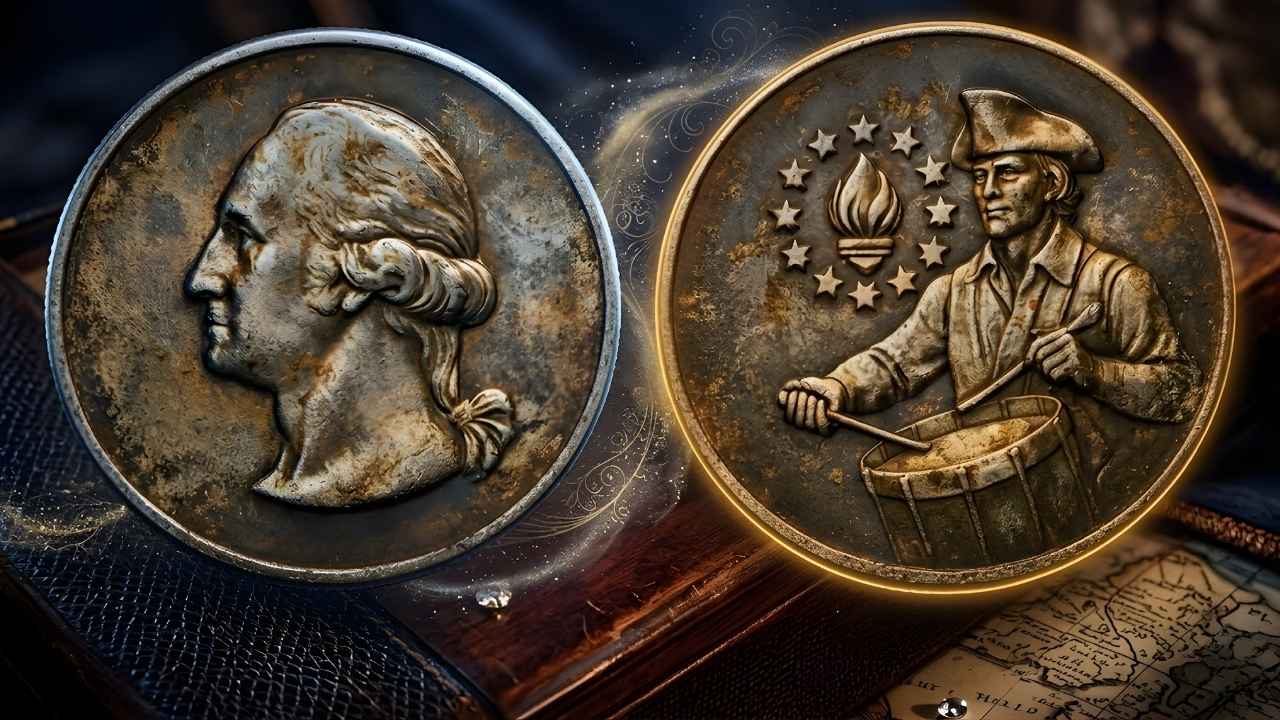
Bicentennial quarters remain one of the most recognized modern coins in American history. Issued to celebrate 200 years of independence, the 1776–1976 quarter stands out from regular issues thanks to its dual date and distinctive reverse design. While millions were produced, collector demand has kept interest strong, especially for high-grade and silver examples. In 2026, these coins continue to trade actively in the numismatic market, with certain varieties bringing solid premiums over face value.
Historical Background of the 1776–1976 Quarter
To mark the nation’s bicentennial, the U.S. Mint released special reverse designs for the quarter, half dollar, and dollar. The Bicentennial quarter retained the familiar portrait of George Washington on the obverse but replaced the traditional eagle reverse with a Colonial drummer design. The coin also features the dual date 1776–1976, making it instantly recognizable.
Although production began in 1975, no quarters were dated 1975. Instead, all coins struck during that two-year period carried the bicentennial date. This unusual detail adds to the coin’s historical appeal and makes it a favorite among collectors building modern U.S. sets.
Coin Specifications and Physical Features
Bicentennial quarters follow the standard specifications of regular Washington quarters. Each coin measures 24.3 millimeters in diameter and weighs 5.67 grams. The edge is reeded, and the obverse design remains largely unchanged aside from the commemorative date.
These quarters were struck at multiple Mint facilities, including Philadelphia, Denver, and San Francisco. Mint marks help distinguish the origin of each coin, which can influence collector interest, particularly when paired with certain finishes or metal compositions.
Metal Composition and Silver Varieties
Most Bicentennial quarters released into circulation were made from a clad composition consisting of outer layers of copper-nickel bonded to a pure copper core. These are the coins commonly found in pocket change today.
However, the San Francisco Mint also produced special 40 percent silver versions for collectors. These were sold in both proof and uncirculated sets. Because of their silver content, these coins carry intrinsic metal value in addition to their collectible appeal. In stronger silver markets, their melt value alone can exceed that of standard clad examples.
Rarity and High-Grade Demand
With total mintage numbers reaching into the hundreds of millions, Bicentennial quarters are not rare in a general sense. What drives value, however, is condition. Coins that remain in pristine, uncirculated state are far less common than worn examples pulled from circulation.
Collectors often seek coins graded MS65 or higher for business strikes and PR69 or PR70 for proofs. At these levels, even minor imperfections can significantly impact value. Registry-set competition has further increased demand for top-graded coins, pushing premiums higher for flawless specimens.
Understanding Mint Marks and Proof Issues
Mint marks play a key role in identifying Bicentennial quarters. Philadelphia issues typically bear no mint mark or a “P,” Denver coins carry a “D,” and San Francisco proofs display an “S.” Silver proof coins from San Francisco are particularly popular among collectors.
Proof coins are struck with specially prepared dies and polished planchets, giving them mirror-like surfaces and frosted design elements. Deep cameo proofs with strong contrast between fields and devices are especially desirable. Original government packaging can also enhance resale appeal.
Current Market Value in 2026
In today’s market, circulated Bicentennial quarters generally trade close to face value, though exceptional examples in change are worth setting aside. Uncirculated coins with strong luster can sell for several dollars, depending on grade.
Certified high-grade coins often command significantly higher prices, especially when graded by reputable services. Silver 40 percent proof coins consistently bring premiums due to both metal content and collector demand. As with most coins, eye appeal, strike quality, and surface preservation play crucial roles in determining price.
Investment Potential and Long-Term Outlook
While Bicentennial quarters are considered modern issues, they continue to hold steady interest nearly 50 years after their release. Their historical significance, recognizable design, and silver varieties make them attractive to both beginners and seasoned collectors.
From an investment perspective, the strongest potential lies in top-grade certified coins and well-preserved silver proofs. Although they may not deliver rapid returns, they tend to maintain stable demand. As new collectors enter the hobby, iconic coins like the Bicentennial quarter often serve as a starting point, helping sustain long-term interest.
Final Thoughts
Bicentennial quarters combine history, accessibility, and collectible appeal in a way few modern coins can match. While most examples remain affordable, high-grade and silver varieties continue to demonstrate solid market strength in 2026. For collectors and investors alike, understanding condition, composition, and mint origin is essential to identifying the most valuable pieces. Whether held for nostalgia, historical interest, or steady appreciation, the 1776–1976 quarter remains an enduring symbol of America’s bicentennial celebration.