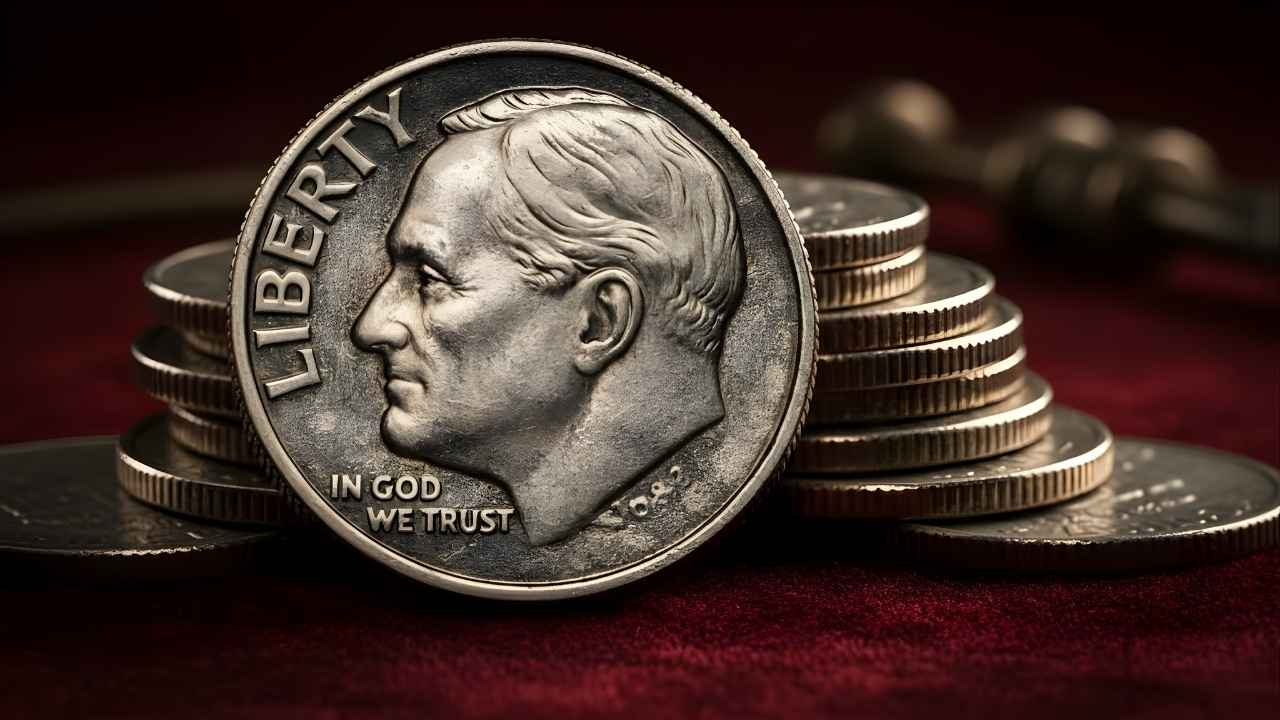
Few modern coins have sparked as much conversation as the 1982 No Mint Mark dime. At first glance, it looks like any ordinary Roosevelt dime from the early 1980s. Yet a small missing letter turned a routine coin into one of the most intriguing modern mint errors in American coin collecting. Stories of sky-high values, including rumors of multi-million-dollar price tags, have only added to its mystique. While some of these claims stretch far beyond reality, the coin’s genuine rarity keeps collectors searching.
How the 1982 No Mint Mark Error Happened
To understand the significance of this coin, it helps to look at minting practices of the time. For decades, dimes struck in Philadelphia did not carry a mint mark. That changed in 1980, when the U.S. Mint began placing a “P” mint mark on Philadelphia coins. From that point forward, every regular Philadelphia Roosevelt dime was expected to display the small “P” above the date on the obverse.
In 1982, however, a limited number of dimes were struck without the “P” mint mark due to a die preparation error. These coins were released into circulation before the mistake was discovered. Because mint errors of this type are unusual in modern coinage, the 1982 No P dime quickly became a recognized rarity.
How to Identify a Genuine Example
Spotting a 1982 No Mint Mark dime requires careful attention to detail. The most important feature is the complete absence of the “P” mint mark above the date. If a 1982 dime shows a “D,” it was struck in Denver and is not part of this error. If it shows a “P,” it is a normal Philadelphia issue.

Collectors should also examine the coin’s surface and overall condition. Many genuine examples entered circulation and show wear. Higher-grade pieces, especially those in Mint State condition, are much scarcer and therefore more valuable.
Because altered coins exist, professional authentication is strongly recommended. Reputable grading services evaluate the coin’s authenticity and assign an official grade, which can significantly influence market value.
Separating Fact from $350 Million Fiction
Sensational headlines have claimed that the 1982 No Mint Mark dime is worth hundreds of millions of dollars. These figures capture attention but do not reflect verified sales data. No confirmed auction record supports valuations anywhere near such astronomical amounts.
In reality, the coin’s value depends largely on its condition. Circulated examples may sell for hundreds of dollars, while high-grade uncirculated pieces can reach several thousand. Exceptional specimens with strong eye appeal and certification from major grading companies tend to command the highest prices.

The gap between rumor and reality is common in the coin world. Exaggerated numbers often circulate online, but serious collectors rely on auction archives and dealer records for accurate pricing information.
Why Collectors Still Chase This Dime
Despite inflated value claims, the 1982 No Mint Mark dime remains highly desirable. Its appeal lies in a combination of factors: it is a modern coin, it represents a clear minting mistake, and it can still occasionally be found in old collections or rolls of coins. That possibility fuels the excitement.
Collectors enjoy the challenge of searching bank rolls or inherited coin jars, hoping to spot the missing mint mark. Even though the odds are slim, the idea that a valuable error coin could be hiding in everyday change keeps interest alive.
Additionally, the coin tells a story about a transitional moment in mint history. The shift to adding mint marks to Philadelphia coins was relatively recent at the time, making this error a reminder of how small production changes can lead to collectible varieties.

Market Outlook in 2026
As of 2026, demand for notable mint errors remains steady. Modern collectors appreciate coins that are both historically interesting and financially accessible compared to classic rarities from the early 20th century. The 1982 No Mint Mark dime fits neatly into that category.
While it is unlikely to reach the exaggerated figures sometimes quoted online, it continues to hold solid value in the collector market. Well-preserved examples with certification are especially attractive to buyers who prioritize authenticity and long-term stability.
Final Verdict
The 1982 No Mint Mark dime proves that even a small detail can transform an everyday coin into a sought-after collectible. Although claims of $350 million valuations are more fiction than fact, the coin’s genuine scarcity and fascinating backstory give it lasting appeal. For collectors, it represents the thrill of discovery and the importance of careful observation. In the world of numismatics, sometimes the smallest missing letter can make all the difference.