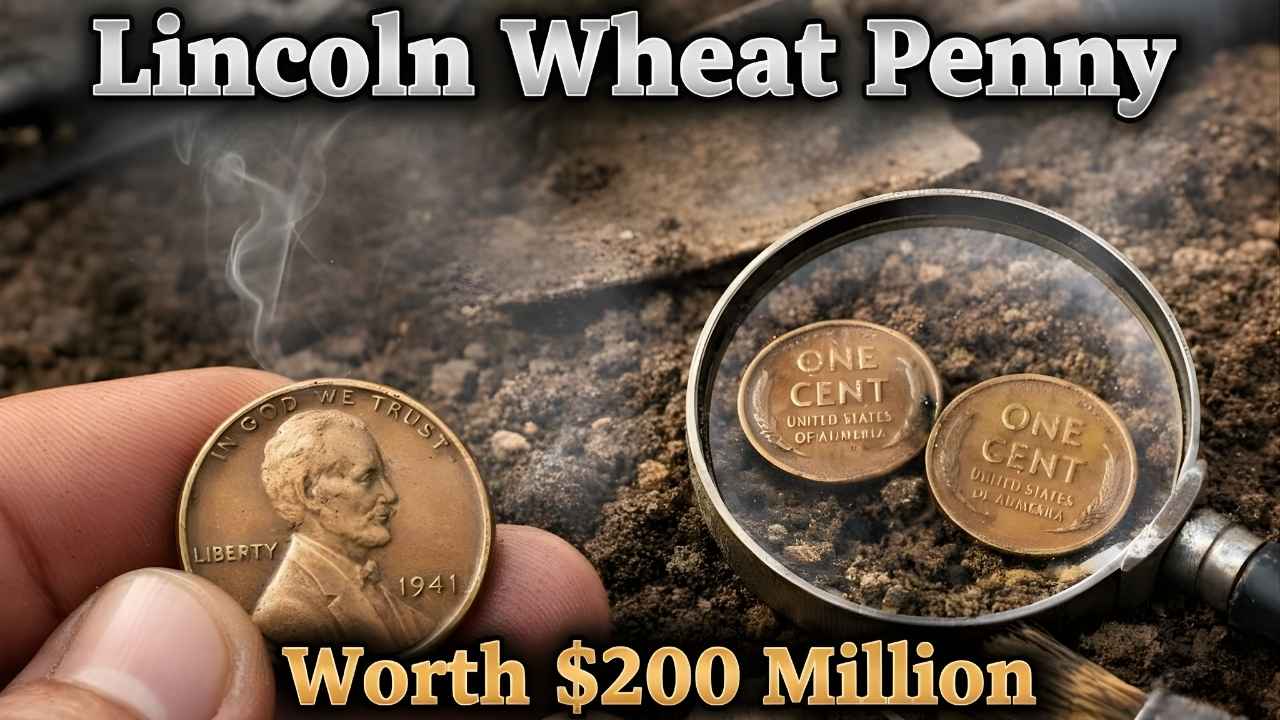
Stories about a Lincoln Wheat Penny worth $200 million spread quickly online, capturing the imagination of collectors and casual readers alike. The thought that a simple one-cent coin could transform someone’s life overnight is irresistible. While the headline-grabbing figure is far from reality, the fascination surrounding these coins is rooted in genuine history, real rarity, and remarkable auction results that have made certain Lincoln cents incredibly valuable.
The Birth of the Lincoln Wheat Penny
The Lincoln Wheat Penny first appeared in 1909, marking the 100th anniversary of Abraham Lincoln’s birth. It was the first regular U.S. coin to feature an actual historical figure rather than a symbolic image. Designed by Victor David Brenner and produced by the United States Mint, the coin displayed Lincoln’s portrait on the obverse and two wheat stalks framing the denomination on the reverse.
This wheat design remained in circulation until 1958, after which it was replaced by the Lincoln Memorial reverse. Over nearly five decades of production, billions of Wheat Pennies were struck. Most are common today, but a small number of key dates and mint errors have become legends in the numismatic world.
Why Certain Wheat Pennies Are Truly Valuable
The enormous attention surrounding Wheat Pennies is not entirely baseless. Some varieties are genuinely rare and command impressive prices. The 1909-S VDB, struck in limited numbers at the San Francisco Mint, remains one of the most famous key dates. Only 484,000 were minted before Brenner’s initials were removed from the reverse, creating immediate scarcity.
Other valuable issues include the 1914-D from the Denver Mint and the 1922 No D variety, which resulted from die problems that left some coins without a visible mint mark. Then there is the legendary 1943 copper cent, mistakenly struck during a year when pennies were supposed to be made of steel to conserve copper for World War II. Authentic examples of that coin have sold for over a million dollars at auction.
These genuine rarities help explain why rumors of sky-high values continue to circulate.
The $200 Million Claim Examined
Despite the excitement, no Lincoln Wheat Penny has ever sold for $200 million. Even the rarest known examples, including pristine 1943 copper cents, have achieved prices in the low millions at most. The $200 million figure is a dramatic exaggeration designed to generate clicks and spark curiosity.
That does not mean Wheat Pennies lack value. High-grade key dates can sell for six figures, and certain rare errors reach into seven figures. However, such coins are extremely scarce, and most Wheat Pennies found in circulation are worth only a small premium over face value.
The gap between myth and reality is wide, but the myth persists because it taps into the universal dream of unexpected wealth.
Famous Finds That Fueled the Hype
Part of the legend surrounding Wheat Pennies comes from real-life discoveries. Collectors have uncovered valuable coins in inherited jars, estate collections, and even pocket change decades ago. Stories of people finding rare cents in everyday situations reinforce the idea that treasure could be hiding anywhere.
Major auction houses regularly showcase high-grade key dates and rare error coins, drawing national attention when prices soar. Each record-setting sale adds momentum to the narrative that an ordinary penny could be extraordinary.
How to Identify a Potentially Valuable Wheat Penny
For anyone inspired to start searching, knowledge is essential. Begin by checking the date and mint mark, located below the year on the obverse. Key dates such as 1909-S VDB, 1914-D, and 1922 No D deserve close inspection. Examine coins carefully for signs of doubling in the lettering or unusual metal color, particularly for 1943 issues that might be copper instead of steel.

Condition matters just as much as rarity. Coins with sharp details, minimal wear, and original color are far more valuable than heavily worn examples. Professional authentication is critical for high-value coins, as counterfeits and altered pieces do exist in the marketplace.
Why the Legend Endures
The enduring appeal of the $200 million penny lies less in financial accuracy and more in possibility. Coin collecting blends history, detective work, and the thrill of discovery. Even if the odds of uncovering a seven-figure rarity are slim, the search itself is rewarding. Each Wheat Penny connects collectors to a different chapter of American history, from the early 20th century to the wartime era.
Final Thoughts
The Lincoln Wheat Penny remains one of the most beloved coins in American numismatics. While the idea of a $200 million example is pure fantasy, the series includes genuine rarities that have achieved remarkable auction results. Separating hype from fact allows collectors to appreciate these coins for what they truly are: historic artifacts with the potential for significant value. Whether worth one cent or a substantial sum, every Wheat Penny carries a story that keeps the spirit of discovery alive.