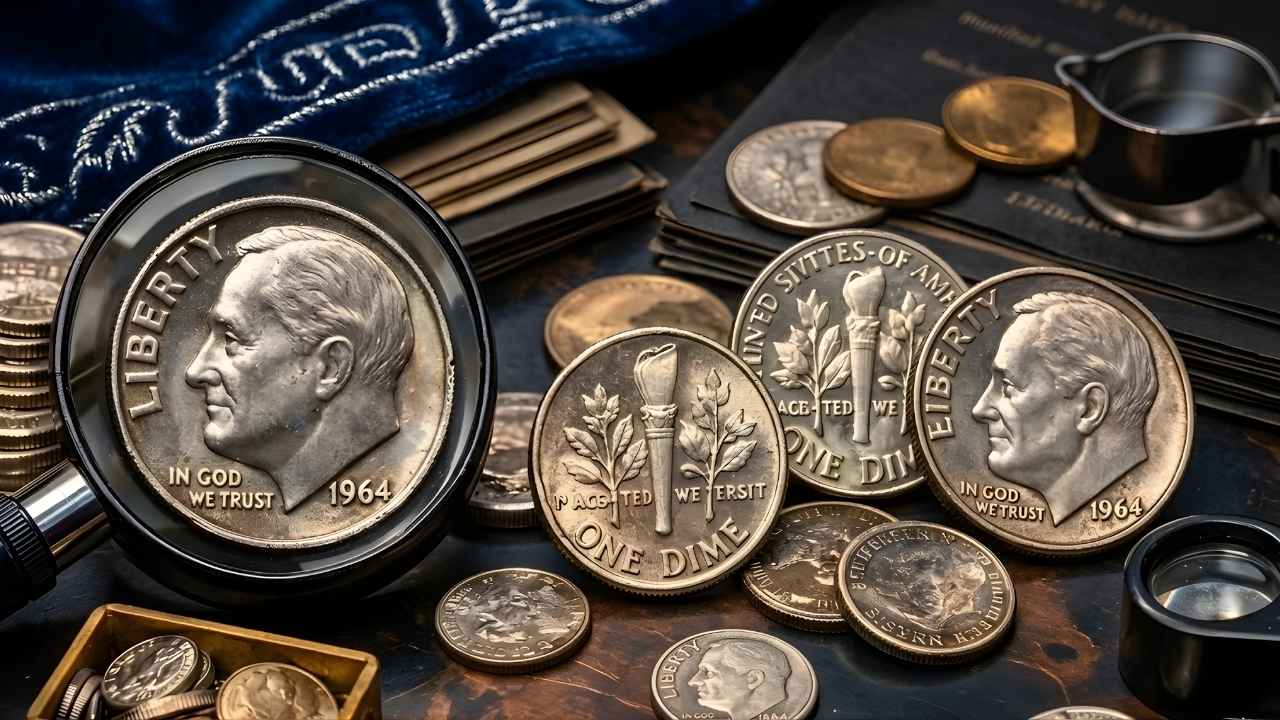
The Roosevelt dime has quietly become one of the most actively collected modern U.S. coin series. First introduced in 1946, the coin honors President Franklin D. Roosevelt and remains in production today. While most Roosevelt dimes are worth only face value, certain dates, mint marks, and high-grade examples can command impressive premiums. In 2025, strong silver prices and growing registry-set competition have pushed rare Roosevelt dime values higher than many collectors expected.
History and Design of the Roosevelt Dime
The Roosevelt dime was introduced shortly after Roosevelt’s death in 1945. He was closely associated with the March of Dimes campaign, which funded polio research, making the dime denomination especially meaningful. The obverse features Roosevelt’s left-facing portrait, while the reverse displays a torch flanked by an olive branch and an oak branch, symbolizing liberty, peace, and strength.
The overall design has remained consistent for decades, meaning that value depends less on design changes and more on date, mint mark, strike quality, and condition.
Silver vs Clad Composition
One of the most important factors influencing Roosevelt dime value is metal composition. Coins minted from 1946 through 1964 contain 90 percent silver and 10 percent copper. Each silver dime holds approximately 0.07234 troy ounces of silver, giving it intrinsic melt value that rises and falls with the precious metals market.
Since 1965, most Roosevelt dimes have been struck in copper-nickel clad composition with a pure copper core. These coins contain no silver and are typically worth face value unless found in exceptional condition. However, the U.S. Mint has continued producing silver proof versions for collectors, which carry both bullion and numismatic premiums.
Key Dates and Low Mintage Issues
Although the Roosevelt dime series is generally considered common, several dates stand out due to lower mintages. San Francisco issues from the late 1940s and early 1950s, including 1949-S, 1950-S, and 1951-S, are particularly desirable in high Mint State grades.
While millions of these coins were struck, relatively few survive in pristine condition. As a result, collectors seeking high-grade examples often compete fiercely, pushing prices upward. The difference between an average uncirculated coin and one graded near the top of the scale can amount to thousands of dollars.
The Importance of Full Bands
Among Roosevelt dime specialists, the Full Bands designation plays a crucial role in determining value. On the reverse, the torch features horizontal bands. If these bands are fully separated and clearly defined, grading services may award a Full Bands designation.
This small detail can dramatically increase a coin’s value. In some cases, a Full Bands example may be worth ten or even twenty times more than a similar coin without the designation. Because strong strikes are harder to find, especially on earlier issues, Full Bands coins remain highly sought after in 2025.
Notable Errors and Varieties
Collectors also pay close attention to mint errors. One of the most famous modern examples is the 1982 No-P Roosevelt dime, struck in Philadelphia without the “P” mint mark. These coins entered circulation before the mistake was discovered and now sell for significant premiums compared to ordinary clad dimes.
Other doubled dies and strike anomalies can also bring added value, especially when authenticated by respected grading services.
Condition and Professional Grading
As with most modern coin series, condition is everything. The Sheldon grading scale ranges from Poor-1 to Mint State-70. For Roosevelt dimes, coins graded MS65 and above begin to attract serious collector interest. Ultra-high-grade pieces, such as MS67 or MS68 with Full Bands, are rare and often command strong auction prices.
Professional certification from leading grading companies provides assurance of authenticity and grade accuracy. Registry-set collectors, who compete for the finest known examples, frequently drive demand for the highest-graded coins.
Market Trends in 2025
In today’s market, common circulated silver Roosevelt dimes typically trade close to their melt value. As silver prices remain firm in 2025, even worn examples hold steady appeal for bullion-focused buyers.
High-grade silver issues and certified Full Bands coins, however, operate in a different price tier. Select dates in top grades can sell for hundreds or even thousands of dollars. Modern clad coins rarely achieve such levels, but ultra-high-grade pieces can still surprise the market due to their scarcity in flawless condition.

Investment Potential and Collector Appeal
Roosevelt dimes offer a practical entry point for both collectors and investors. Silver issues provide tangible precious metal content, while key dates and high-grade specimens offer long-term numismatic growth potential. The series is affordable enough for beginners yet complex enough to keep advanced collectors engaged.
For investors, focusing on certified Full Bands coins and low-mintage silver dates may offer the strongest long-term outlook. As populations of top-graded examples remain limited, competition for the best pieces is likely to continue.
Final Verdict
Rare Roosevelt dime value in 2025 reflects a powerful mix of silver content, condition rarity, and collector enthusiasm. While most examples remain modestly priced, select coins with low mintages, Full Bands designations, or exceptional grades can reach impressive levels. Whether collected for silver stacking, registry competition, or historical appreciation, Roosevelt dimes continue to demonstrate steady demand and lasting appeal in the modern coin market.